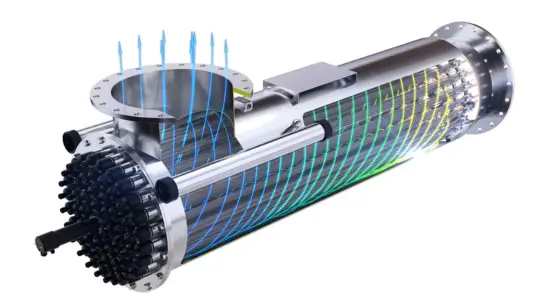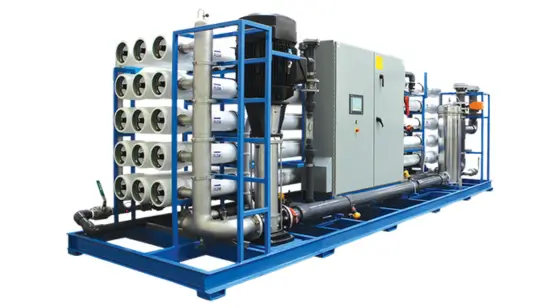

Saudi businesses often need water treatment solutions that go beyond basic filtration. In many commercial environments, water quality affects equipment performance, operational consistency, and the reliability of daily processes. That is why many companies in Saudi Arabia evaluate commercial ro system as part of their water treatment strategy.
Choosing the right system is not only about filtering water. It is about matching the system to the needs of the business, the source water quality, and the long-term operating requirements of the facility. This makes selecting the right RO system in Saudi Arabia critical for companies that want dependable and consistent results.
Super Quality supports commercial and industrial water treatment projects in Saudi Arabia, with additional offices in the UAE and Lebanon and service coverage across the GCC and Africa. In this article, we focus on how Saudi businesses evaluate and choose the right commercial RO solution.
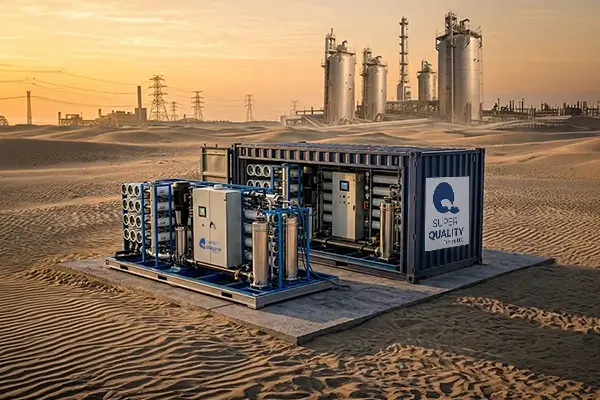
Water quality in Saudi Arabia
Water conditions in Saudi Arabia can vary depending on the location, source, and application. In many commercial settings, businesses need to deal with dissolved solids, hardness, or other water quality concerns that may affect operations. These conditions make advanced water treatment more relevant than basic filtration alone.
For this reason, Saudi companies often look for systems that can provide stable and consistent treated water. A commercial reverse osmosis system is often considered because it helps address water quality concerns at a deeper level. This can be especially important in facilities where water quality affects equipment, production, or service standards.
Related posts
Reverse Osmosis RO System: 10 Vital Elements Guide
Ro Reverse Osmosis Membrane: Every thing you need to know
Why commercial RO matters for Saudi businesses?
Commercial RO systems in Saudi Arabia are used when businesses need more controlled water quality than standard filters can provide. In Saudi Arabia, this can matter for hotels, restaurants, hospitals, offices, laundries, laboratories, and other commercial facilities. These environments often depend on reliable water quality for smooth day-to-day operations.
A commercial RO system can support business continuity by helping reduce the impact of poor source water. It can also help improve consistency across processes that depend on treated water. For many Saudi businesses, this makes RO a practical and long-term treatment choice.
How Saudi businesses choose the right system?
Saudi businesses usually start by identifying the water quality problem they need to solve. They may be looking to improve treated water quality, protect equipment, or support a specific process within the facility. Once the need is clear, the next step is to match the system capacity and configuration to the actual demand.
The source water should also be reviewed carefully. Different water conditions can affect how a system performs, so the right design depends on the actual water profile. In many cases, businesses also consider maintenance access, system reliability, and whether the unit can support future growth.
What to consider before selection?
1. Daily Water Demand
Daily water demand is a primary factor when selecting a commercial RO system. A system that is undersized may fail to meet operational needs, while an oversized system can lead to unnecessary energy consumption and inefficiency. The system capacity should align closely with actual usage patterns.
2. Source Water Quality
The quality of incoming water directly affects system design and performance. Saudi businesses need to evaluate parameters such as salinity, hardness, and contaminants to determine the required level of treatment and appropriate system configuration.
3. Membrane Selection
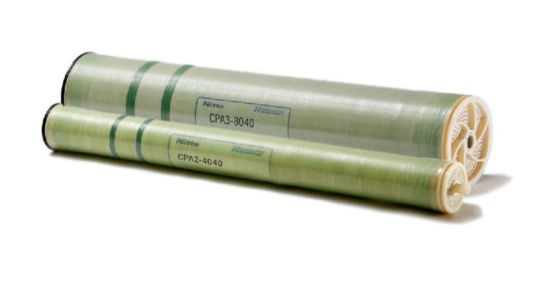
The membrane is the core component of the RO system and has a direct impact on water quality and efficiency. Selecting the right type based on operating conditions and desired output ensures consistent performance and long-term reliability.
4. Pre-Treatment and Maintenance
Effective pre-treatment protects the RO system from fouling and scaling, improving lifespan and performance. Additionally, ease of maintenance and serviceability should be considered to ensure stable operation and reduce downtime over time.
Commercial RO vs basic filtration
| Topic | Basic Filtration | Commercial RO |
|---|---|---|
| Main treatment level | Removes sediment, chlorine, and visible particles | Treats dissolved impurities as well as common contaminants |
| Best use case | General water improvement | Demanding commercial environments |
| Water quality impact | Improves basic water quality | Delivers a deeper level of treatment |
| Operational effect | Helpful, but limited | Better for equipment protection and consistent performance |
| Suitability for Saudi businesses | May be enough for simpler needs | Better when water quality affects reliability, processes, or equipment |
| Why it matters for Saudi businesses? | Basic Filtration | Commercial RO |
|---|---|---|
| Equipment protection | Limited protection against dissolved impurities | Better protection in harder water conditions |
| Process consistency | May not keep water quality stable enough for sensitive operations | Helps maintain more consistent treated water |
| Operational reliability | Suitable for lighter requirements | Better fit when water quality affects daily business performance |
| Overall recommendation | Good for simple filtration needs | Better when deeper treatment is required |
Industries that benefit most
Many sectors in Saudi Arabia use commercial RO systems because they depend on stable water quality. These include hospitality, food service, healthcare, cleaning services, office buildings, and light industrial facilities. In these sectors, water treatment is part of maintaining service quality and operational control.
Businesses in these industries often choose RO because it supports consistent results across daily operations. It can also help reduce the impact of water-related issues that would otherwise create extra maintenance or performance challenges. This is why commercial RO is often part of a wider business infrastructure strategy.
Regional support and coverage
Saudi Arabia is an important market for commercial water treatment because business water needs vary widely across sectors and locations. Super Quality works with commercial and industrial projects in Saudi Arabia and also serves clients across the GCC and Africa. That regional experience helps support businesses with practical system selection and application-based solutions.
Having offices in the UAE, Saudi Arabia, and Lebanon also helps the company stay close to customer needs in the region. For Saudi buyers, that means access to a team that understands local commercial requirements and broader regional operating conditions.
Conclusion
Saudi businesses choose commercial reverse osmosis water treatment when they need dependable, higher-level water quality for daily operations. The right system depends on source water conditions, facility demand, membrane selection, and long-term maintenance considerations. For commercial buyers, the goal is not just treated water, but stable performance that supports the business.
By focusing on application fit instead of just product features, Saudi companies can choose a system that works for their specific needs. This is why commercial RO remains a strong option for many businesses in Saudi Arabia.
FAQs
1. What is a commercial reverse osmosis system?
A commercial reverse osmosis system is a water treatment solution designed for business environments that require higher water purity than standard filtration systems can provide. It uses semi-permeable membranes to remove dissolved salts, contaminants, and impurities at a deeper level.
2. Why do Saudi businesses use commercial RO systems?
Saudi businesses rely on commercial RO systems to enhance water quality, protect equipment from scaling and damage, and ensure operational consistency. This is particularly important in regions with high salinity or variable water sources.
3. How is commercial RO different from regular filtration?
Regular filtration typically removes larger particles like sediment and chlorine, while commercial RO systems target dissolved solids and microscopic impurities. This results in significantly higher water purity and broader treatment capability.
4. What businesses in Saudi Arabia use commercial RO?
Commercial RO systems are widely used across multiple sectors, including hotels, restaurants, hospitals, offices, laundries, laboratories, and light industrial facilities. These applications rely on reverse osmosis water treatment for businesses to ensure consistent, high-quality water for daily operations.
5. What should Saudi businesses consider before choosing a system?
Key considerations include the quality of the source water, required daily output, appropriate membrane type, necessary pre-treatment stages, and long-term maintenance requirements. These factors directly impact system efficiency and cost.
6. Is commercial RO suitable for all business applications?
Not necessarily. The suitability of a commercial RO system depends on the specific water quality issues, the required production capacity, and the nature of the business operations.
7. Why is membrane selection important?
The membrane is the core component of the RO system, determining the level of purification, system performance, and durability. Choosing the right membrane ensures optimal results and long-term operational reliability.