
What Is a Reverse Osmosis (RO) Membrane?
A reverse osmosis ro membrane is a semi-permeable barrier that separates pure water molecules from dissolved solids, salts, and contaminants. In simple terms, it acts as the core purification element of an RO system.
How reverse osmosis ro membranes Works?
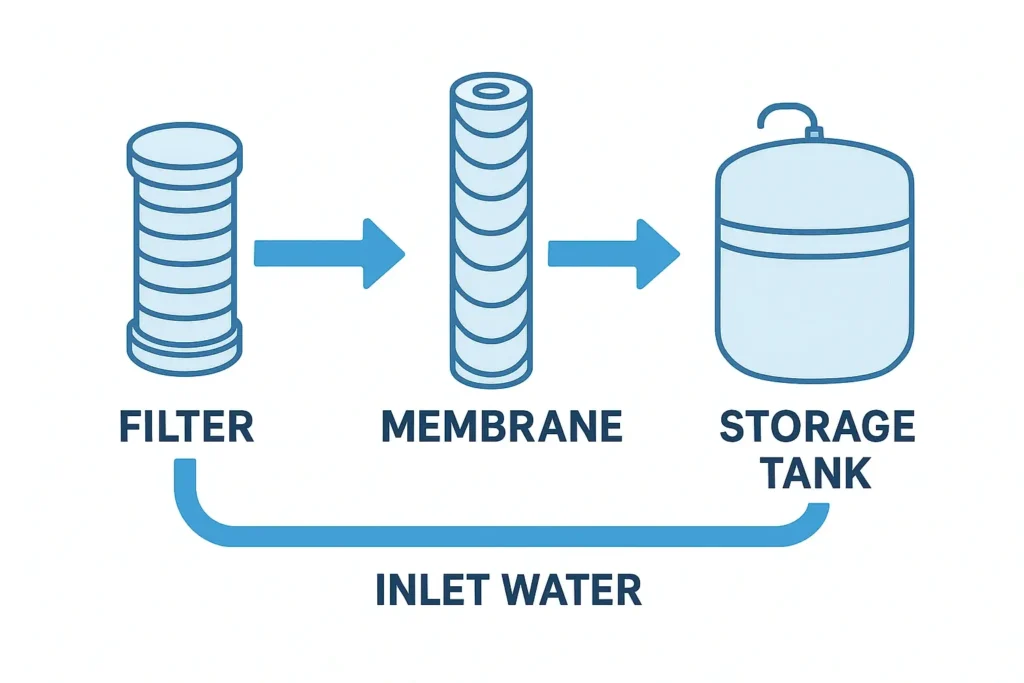
Under pressure, feed water is forced through the RO membrane filter.
- Clean water (permeate) passes through the membrane.
- Impurities (reject water) are flushed away.
The result is water that’s 95–99% free from total dissolved solids (TDS), metals, and bacteria.
Super Fact
Reverse Osmosis Membranes can filter particles as small as 0.0001 microns — that’s 500,000 times smaller than the width of a human hair!
This incredible precision explains why RO systems are used in laboratories, desalination plants, and even spacecraft water recovery units.
Why the Ro Membrane Matters More Than the Machine?
While pre-filters, pumps, and tanks are important, the membrane for reverse osmosis defines:
- Filtration accuracy (in microns)
- Water recovery rate
- Energy consumption
- Long-term operating cost
Even an advanced RO system cannot perform well with a poor-quality or degraded membrane.
RO Membrane types & Their Applications
Choosing the right membrane depends on water source, usage, and quality standards. Below are the main categories:
1. Thin Film Composite (TFC) Membranes
- Most common in residential and commercial systems
- Made from multiple polymer layers for high rejection rates
- Sensitive to chlorine, requiring carbon pre-filtration
See more: Pre-Filters – Cartridge Filters
2. Cellulose Acetate (CA) Membranes
- Tolerate chlorine but have lower rejection rates
- Common in municipal water where disinfection is strong
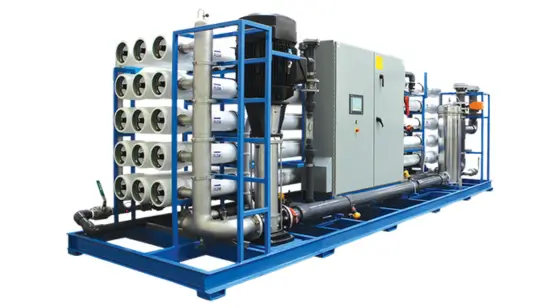
3. Industrial RO Membranes
- Industrial Ro membranes are Designed for large-scale desalination and wastewater recovery
- Built with higher surface area and chemical resistance
- Support pressures up to 1000 psi
See more
Ultra-Filtration (UF) system UAE
Ultraviolet UV system (Disinfection) UAE
4 Key Factors to Check Before Buying an RO Membrane
1. Filtration Performance
Check the salt rejection rate (typically 95–99%) and flow rate (GPD — gallons per day).
High-rejection membranes are ideal for brackish or seawater, while moderate rejection works for soft water.
2. Material Compatibility
Ensure compatibility with the feed water’s chlorine, pH, and temperature levels.
For example, TFC membranes require a carbon pre-filter to remove chlorine before water reaches the membrane.
3. Brand & Certification
Choose authorized suppliers or globally recognized brands such as DOW FilmTec, Toray, or Hydranautics. Look for NSF or ISO certifications for material safety and performance testing.
4. Maintenance & Cleaning
Even the best membranes lose efficiency over time. Regular RO membrane cleaning removes scale, biofilm, and fouling that block the pores. Cleaning frequency depends on water hardness and total dissolved solids (TDS).
RO Membrane Cleaning and Replacement
When to Clean?
Clean your membrane if:
- Permeate flow decreases by 10–15%.
- Salt rejection drops below 90%.
- Pressure differential increases.
Best Cleaning Methods
- Chemical cleaning (acid or alkaline) to dissolve scaling or biofilm
- Flushing with low-pressure water
- pH-controlled rinsing to stabilize performance
RO Membrane Replacement
Most residential membranes last 2–3 years, while industrial membranes can last up to 5 years with proper maintenance. Always match replacement parts with your system’s flow and pressure specifications.
Need RO system service or membrane check? Our certified team offers on-site cleaning and replacement across the UAE.
💧 Book your maintenance visit now to keep your system running at peak performance.
Understanding RO Membrane Price and Value
The price of an RO membrane varies widely depending on performance, material, and application. Beyond the number on the label, its true value lies in efficiency, durability, and long-term maintenance cost.
1. Application Type
Industrial and desalination membranes are built for higher pressure, salinity, and flow — requiring stronger materials and precision manufacturing compared to domestic units.
2. Membrane Capacity (GPD)
Higher GPD membranes handle more water per day but need tighter construction standards and higher energy optimization, which impacts cost and efficiency.
3. Material and Technology
Advanced TFC membranes and anti-fouling designs offer better rejection rates and longer life, reducing maintenance frequency and improving performance stability.
4. Brand and Certification
Trusted brands like DOW FilmTec, Toray, Nitto Group, and Protec Arisawa guarantee tested quality, certified materials, and consistent results — essential for reliability and warranty assurance.
5. Operating Conditions
Water quality, pressure, and maintenance directly affect lifespan and total ownership cost. Proper pre-filtration and periodic cleaning help protect performance and reduce replacement needs.
💧 For tailored guidance on selecting the right RO membrane for your system, book now your consultation with Super Quality Est.
Common Mistakes Buyers Make
- Choosing an incompatible membrane for the water source
- Ignoring pre-filtration (which leads to early fouling)
- Using non-certified replacements from unknown brands
- Overlooking membrane cleaning and monitoring
Avoiding these mistakes extends your system’s life and ensures consistent water purity.
How to Identify Genuine RO Membrane Suppliers?
Choosing a trusted supplier ensures long-term RO performance and compliance.
Super Quality Est. is an authorized UAE distributor of international brands such as DOW FilmTec, Toray, and Hydranautics, offering certified membranes, professional installation, and technical support across Abu Dhabi, Dubai, Sharjah, Ajman, and all UAE.
💧 Book now your consultation to get expert guidance and verified membrane solutions for your system.
Final Recommendations
If you’re planning to buy a reverse osmosis membrane or a complete RO system, consider the following checklist:
Match the membrane to your water type (TDS, hardness, pH).
Verify flow capacity (GPD).
Choose certified brands and suppliers.
Plan for cleaning and replacement cycles.
💧 Book your consultation today to get expert advice on the right membrane and system configuration for your needs.
Conclusion
The RO membrane isn’t just another filter — it’s the core technology that defines how pure your water will be. Understanding membrane types, performance, and maintenance helps you make an informed, cost-effective decision.
Whether for home, lab, or industrial applications, the right reverse osmosis membrane ensures consistent water quality, lower operating costs, and long system life.